Sustainability


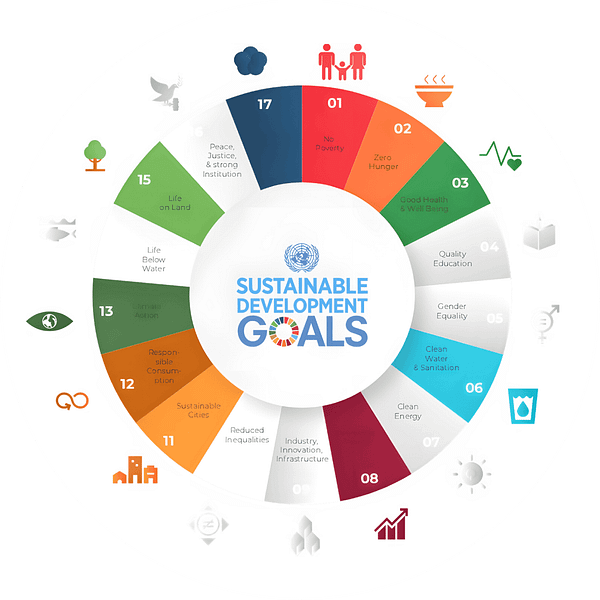

No Poverty
01
Over 600 million people work in agriculture globally, yet the majority still live on less than $3 a day. Baramouda empowers smallholder and low-income farmers by providing affordable, efficient fertilizers that restore their land, reduce dependency on costly chemical inputs, and boost income and resilience. We turn waste into opportunity, not just for soil, but for the people who depend on it.

Zero Hunger
02
With 735 million people facing hunger, and 30% of soils too degraded to grow healthy crops, the world urgently needs regenerative solutions. Baramouda tackles food insecurity by producing organic and biofertilizers from food waste and agricultural by-products, reviving depleted land and enabling the growth of clean, nutrient-rich food. We even grow mushrooms from recycled coffee waste, closing the loop between food waste and food supply.

Good Health and Well-being
03
More than 2 million lives are affected annually by exposure to toxic agrochemicals and air pollution from landfills. Baramouda eliminates this risk by offering biologically coded, chemical-free fertilizers that protect both farmers and the environment. Our waste solutions also reduce harmful methane emissions, making agriculture safer for workers and communities alike.

Clean Water and Sanitation
06
By 2030, 1 in 2 people will live in water-stressed regions. Our fertilizers increase soil water-holding capacity by up to 30%, helping farmers irrigate less while maintaining productivity. Cleaner inputs also mean less runoff and pollution of nearby water bodies, safeguarding ecosystems and drinking sources.

Decent Work and Economic Growth
08
The circular economy can create up to 7 million jobs worldwide. Baramouda’s model already supports green employment across collection, R&D, biotechnology, and distribution. We don’t just create products — we build climate careers that uplift communities.

Industry, Innovation and Infrastructure
09
In regions where less than 5% of organic waste is properly processed, Baramouda pioneers’ scalable circular infrastructure, combining biotech labs, precision fermentation, and a smart waste management platform that digitizes, verifies, and scales every kilogram we transform.

Sustainable Cities and Communities
11
Over 60% of global waste comes from urban canters and most ends up in landfills. Baramouda intercepts food and organic waste at the source (e.g., food chains, hospitals, factories) and redirects it into regenerative systems, creating cleaner cities, lower emissions, and greener communities.

Responsible Consumption and Production
12
The world wastes 1.3 billion tons of food annually. Baramouda turns this crisis into circular value by converting organic waste into high-quality fertilizers and mushrooms. Our full-cycle model ensures that nothing is wasted, every step is tracked, measured, and reintroduced into the production chain.

Climate Action
13
Organic waste contributes to up to 10% of global GHG emissions, mainly through methane. Baramouda prevents this by intercepting waste, avoiding landfill emissions, and replacing fossil-based fertilizers with carbon-light, biology-based solutions that help crops survive rising temperatures and drought.

Life on Land
15
More than 33% of Earth's land is severely degraded. Baramouda’s fertilizers restore soil structure, stimulate microbial activity, and increase organic matter helping to reverse decades of damage. Our products do more than feed plants; they heal ecosystems and protect the base of all terrestrial life.

Partnerships for the Goals
17
Solving the climate and food crises requires collaboration. Baramouda partners with institutions, industries, and innovators to co-create waste collection systems, pilot regenerative practices, and scale impact beyond borders. We believe partnerships are the true engine of transformation.